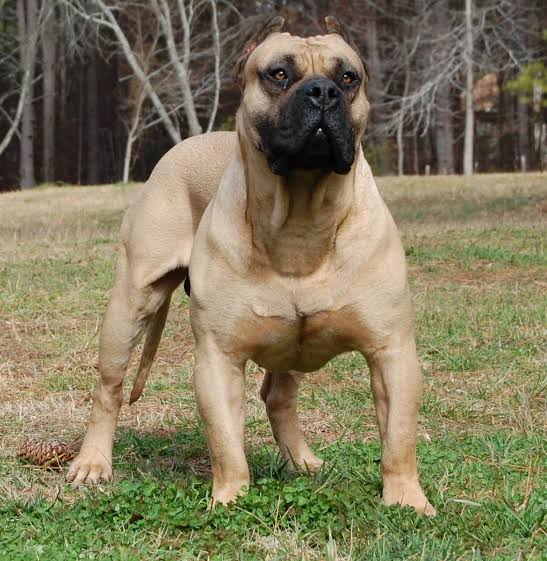
The boerboel is a dominant and confident dog, the boer is devoted to protecting the owner at any cost.
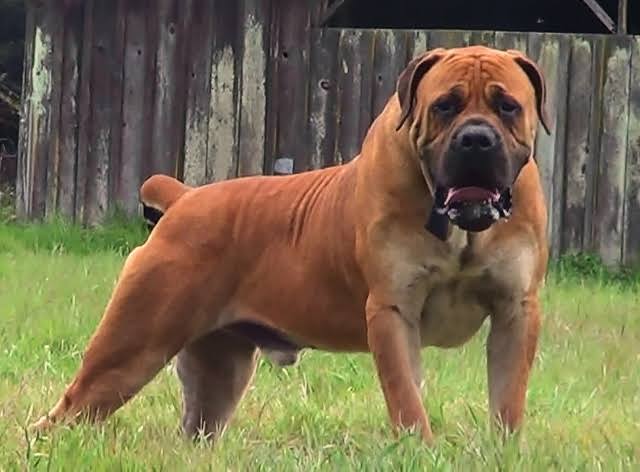
The boer was bred to help farmers in South Africa defend their homesteads from hyenas and lions
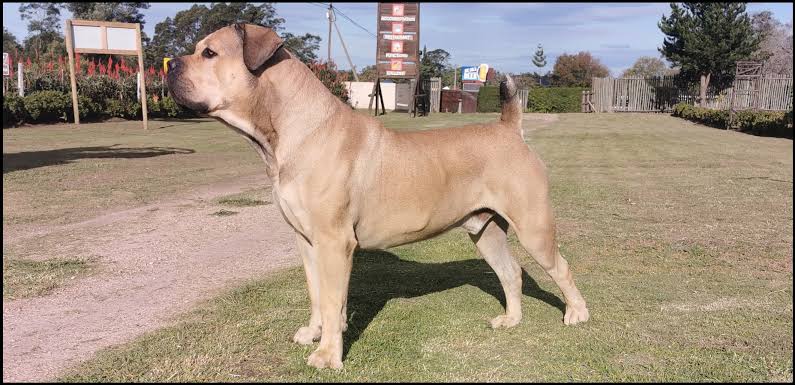
The Boerboel is a large, mastiff-type dog from South Africa. This breed is large with a strong bone structure and well developed muscles. Its head appears blocky with a short length between the stop and nose. -The Boer’s physical strength is only matched by the strength of their devotion to their homes and families. The Boerboel breed is descended from dogs brought by Dutch settlers to South Africa who defended the homestead from hyenas, lions, leopards, and other dangerous wildlife. Today, they are prized as watchdogs, guardians, and competitors in canine competitions, as well as highly protective family companions that adore kids. They can, however, be quite territorial
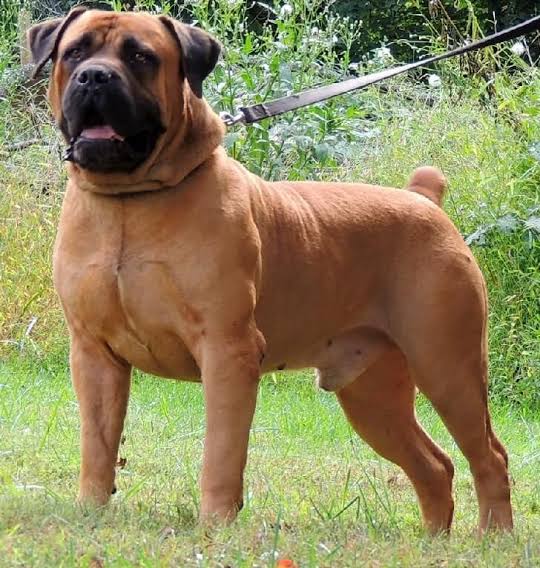
Since Boerboels have been revived in South Africa, they have grown in popularity and have been exported around the world. Even so, they are still considered to be a more rare breed.
Information and facts about the boerboel
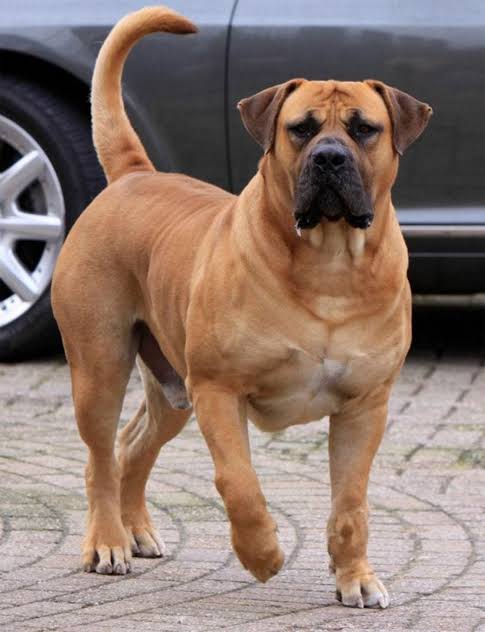
Other names: South African Mastiff, South African Boerboel, The Bore, Borbull, or Bole.

Origin: South Africa
| Other names | South African Mastiff, South African Boerboel, The Bore, Borbull or Bole |
| Origin | South Africa |
| Types of boerboels | |
| Colour | brindle, fawn, and brown. |
| Pattern |
| Height | 24 to 28 inches (male) 22 to 26 inches (female) |
| Wheight | 110 to 200 pounds (male) 90 to 180 pounds (female) |
| Life expectancy | 10 to 12 years |
| Produce | 5 to 20 puppies |
Facts
*The Boerboel originated in South Africa in the 1800s.
*A mix of several different dog breeds, the Boerboel has the best traits of each. They are swift runners, capable of subduing large game.
*The boerboel is banned in several countries.
* Dutch settlers in South Africa were amused by the alertness and courageousness of this breed, especially when it came to defending their property.
* The boerboel was so power and protective that it was able to fend off large South African game like leopards and hyenas without much of a struggle.
* The boerboel is known to be aggressive with other dogs especially the same gender.
* Surprisingly enough, this breed seems to do pretty well with cats, We think it’s because of the fact that they were never trained to hunt small game.
*The Boerboel isn’t just a good guard dog. It is a great guard dogs and watchdog.
* The boerboel doesn’t shed at all
* The Boerboel is know to be quiet. They only bark when they see a potential threat.
Characteristic of the boerboel
| Adaptability | ⭐⭐⭐⭐⭐ |
| Appearance | ⭐⭐⭐⭐⭐ |
| Dangerous | ⭐⭐⭐⭐⭐ |
| Energy | ⭐⭐⭐⭐⭐ |
| Exercise needed | ⭐⭐⭐⭐⭐ |
| Health | ⭐⭐⭐⭐⭐ |
| Intelligence | ⭐⭐⭐⭐⭐ |
| Muscle and power | ⭐⭐⭐⭐⭐ |
| Loyal | ⭐⭐⭐⭐⭐ |
| Rareness | ⭐⭐⭐⭐⭐ |
| Obedience | ⭐⭐⭐⭐⭐ |
| Personality | ⭐⭐⭐⭐⭐ |
| Temperament | ⭐⭐⭐⭐⭐ |
History of the boerboel
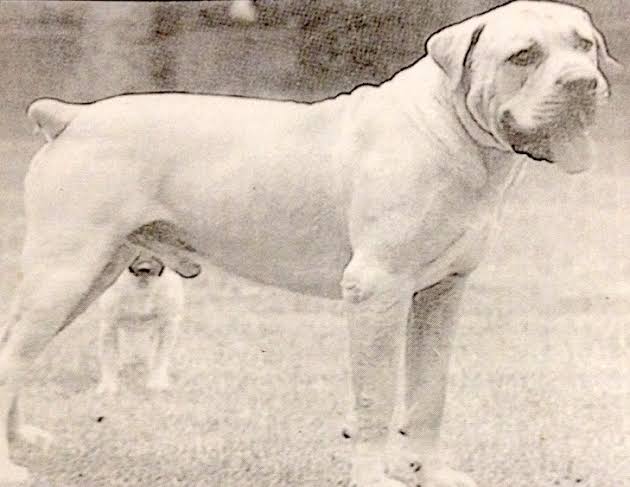
Some history, murky as it might be: The Boerboel (pronounced “boo-r-bull”) is South Africa’s answer to the Mastiff. The name Boerboel derives from the Afrikaans words boer which means farmer, and “boel” which is a shortening of “boelhond” which means bulldog.
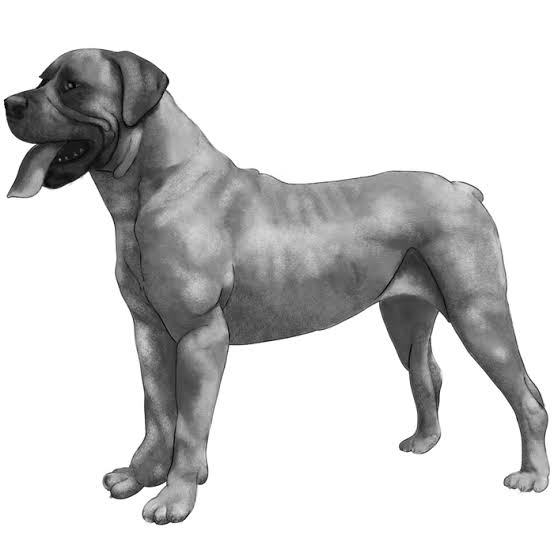
Some of the Boerboel’s ancestors came with the first European settlers in southern Africa: When Jan van Riebeeck arrived in 1652 to work for the tea company that founded the Dutch colony at the Cape of Good Hope, he brought along a Bullenbeisser “biter of bulls” a now-extinct breed believed to have been involved in the development of the Boxer as well. Centuries later, DeBeers imported some of Britain’s finest Bullmastiffs to patrol its famous diamond mines. And even the most fleeting glimpse of a Boerboel reveals the Bullmastiff influence in terms of the large, blocky head, tremendous bone and traditionally seen colors and patterns (fawn, red and brindle).One historical source dated 1909 describes events in 1857, when a cross between a bulldog and a mastiff referred to as the “Boer Hunting Dog” was the best dog for hunting leopards and baboons .
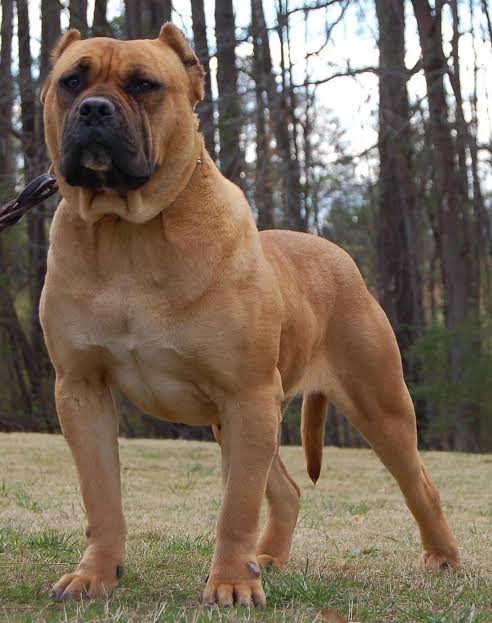
This dog could easily kill a leopard if they cross paths
 doglover.data.blog