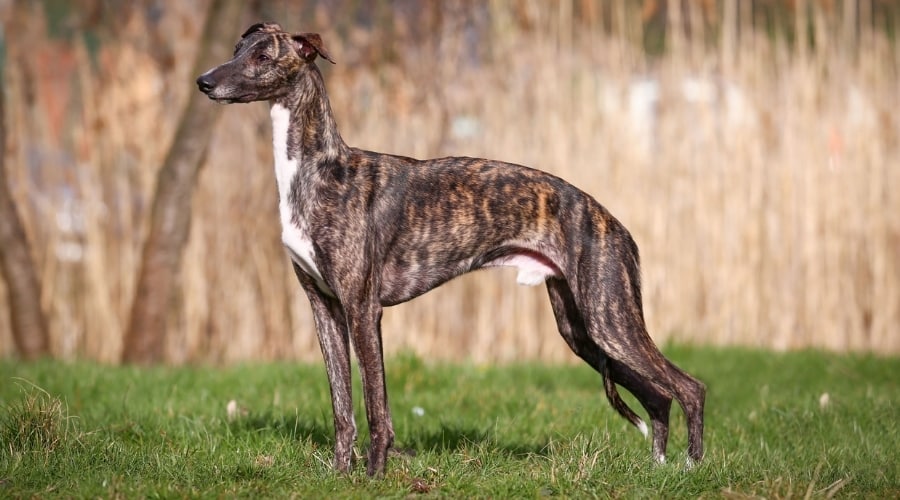
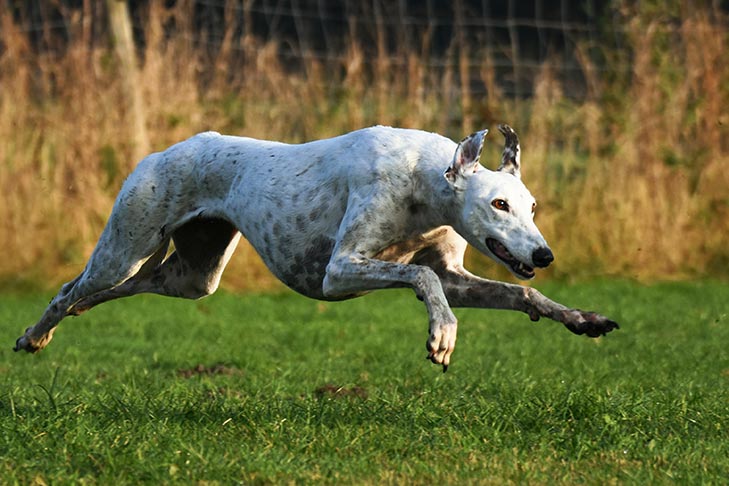
The Greyhound is a breed of dog, a sighthound which has been bred for coursing game and greyhound racing. It is also referred to as the English Greyhound. Since the rise in large-scale adoption of retired racing Greyhounds, the breed has seen a resurgence in popularity as a family pet.
Speed: 72 km/h (Maximum, Race speed)
Life span: 10 – 14 years
The Kennel Club: standard
Temperament: Affectionate, Even Tempered, Intelligent, Athletic, Quiet, Gentle.
Characteristic of the grey Hound
| Adaptability | ⭐⭐⭐⭐⭐ |
| Appearance | ⭐⭐⭐⭐⭐ |
| Dangerous | ⭐⭐⭐⭐⭐ |
| Energy | ⭐⭐⭐⭐⭐ |
| Exercise needed | ⭐⭐⭐⭐⭐ |
| Health | ⭐⭐⭐⭐⭐ |
| Intelligence | ⭐⭐⭐⭐⭐ |
| Muscle and power | ⭐⭐⭐⭐⭐ |
| Loyalty | ⭐⭐⭐⭐⭐ |
| Rareness | ⭐⭐⭐⭐⭐ |
| Obedience | ⭐⭐⭐⭐⭐ |
| Personality | ⭐⭐⭐⭐⭐ |
| Temperament | ⭐⭐⭐⭐⭐ |
History of the grey Hound
The ancient skeletal remains of a dog identified as being of the greyhound/saluki form were excavated at Tell Brak in modern Syria, and dated as being approximately 4,000 years old.
Historical literature by Arrian on the vertragus (from the Latin ‘vertragus’, a word of Celtic origin), the first recorded sighthound in Europe and possible antecedent of the Greyhound, suggested that its origin lies with the Celts from Eastern Europe or Eurasia. Systematic archaeozoology of the British Isles conducted in 1974 ruled out the existence of a true greyhound-type in Britain prior to the Roman occupation, which was further confirmed in 2000. Written evidence from the early period of Roman occupation, the Vindolanda tablets (No. 594), demonstrate that the occupying troops from Continental Europe either had with them in the North of England, or certainly knew of, the vertragus and its hunting use.
An archaeological find at the Chotěbuz fort in the Czech Republic of sighthound type, “gracile” bones dating from the 8th to 9th century CE, anatomically defined as those of a 70 cm (28 in) high “greyhound”, were also genetically compared with the modern Greyhound and other sighthounds, and found to be almost completely identical with the modern Greyhound breed, with the exception of only four deletions and one substitution in the DNA sequences, which were interpreted as differences probably arising from 11 centuries of breeding of this type of dog.
All modern pedigree Greyhounds derive from the Greyhound stock recorded and registered first in private studbooks in the 18th century, then in public studbooks in the 19th century, which ultimately were registered with coursing, racing, and kennel club authorities of the United Kingdom. Historically, these sighthounds were used primarily for hunting in the open where their pursuit speed and keen eyesight were essential.
Etymology
The name “Greyhound” is generally believed to come from the Old English ‘grighund’. ‘Hund’ is the antecedent of the modern “hound”, but the meaning of ‘grig’ is undetermined, other than in reference to dogs in Old English and Old Norse. Its origin does not appear to have any common root with the modern word “grey” for color, and indeed the Greyhound is seen with a wide variety of coat colors. The lighter colors, patch-like markings and white appeared in the breed that was once ordinarily grey in color.
The Greyhound is the only dog mentioned by name in the Bible; many versions, including the King James Version, name the Greyhound as one of the “four things stately” in Proverbs 30:29–31. However, some newer biblical translations, including the New International Version, have changed this to ‘strutting rooster’, which appears to be an alternative translation of the Hebrew term ‘mothen zarzir’. However, the Douay–Rheims Bible translation from the late 4th-century Latin Vulgate into English translates this term as “a cock.”
In 1928, the first winner of Best in Show at Crufts was breeder/owner Mr. H. Whitley’s Greyhound Primley Sceptre.Greyhounds have won the award three times in total, the most recent being in 1956.
Historically, English Greyhounds were grouped: two for coursing, as a “Brace”, three for hunting, as a “Leash”, otherwise known as a “couple and a half”.
 doglover.data.blog