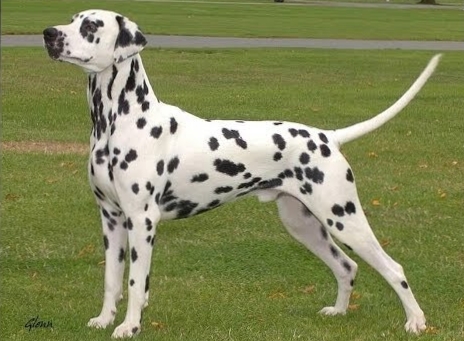
The Dalmatian is a breed of medium-sized dog, noted for its unique white coat marked with black or brown-colored spots. Originating as a hunting dog, it was also used as a carriage dog in its early days. The origins of this breed can be traced back to present-day Croatia and its historical region of Dalmatia.
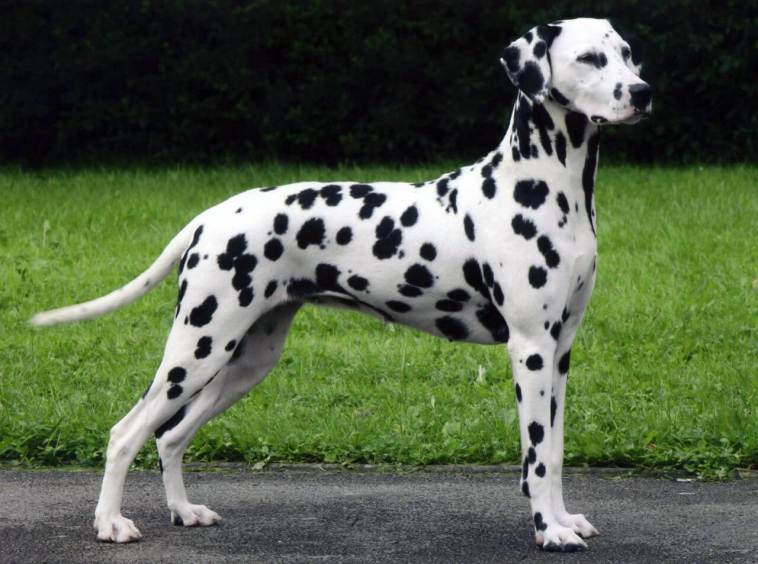
It is thought that early ancestors of the breed were certain breeds of pointers and a spotted Great Dane. Today, it is a popular family pet and many dog enthusiasts enter Dalmatians into kennel club competitions.
Characteristic of the Dalmatian

| Adaptability | ⭐⭐⭐⭐⭐ |
| Appearance | ⭐⭐⭐⭐⭐ |
| Dangerous | ⭐⭐⭐⭐⭐ |
| Energy | ⭐⭐⭐⭐⭐ |
| Exercise needed | ⭐⭐⭐⭐⭐ |
| Health | ⭐⭐⭐⭐⭐ |
| Intelligence | ⭐⭐⭐⭐⭐ |
| Muscle and power | ⭐⭐⭐⭐⭐ |
| Loyalty | ⭐⭐⭐⭐⭐ |
| Rareness | ⭐⭐⭐⭐⭐ |
| Obedience | ⭐⭐⭐⭐⭐ |
| Personality | ⭐⭐⭐⭐⭐ |
| Temperament | ⭐⭐⭐⭐⭐ |
History of the dalmatian
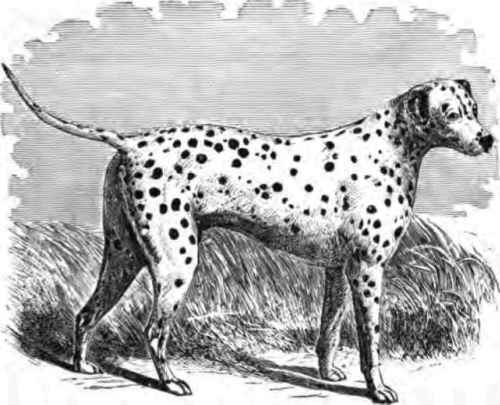
The first known written information about Dalmatian dog is from 1374, when Bishop of Đakovo, Peter mentions hunting dog from Croatia, mostly from Dalmatia with short white hair and black round spots on various parts of the body, and he called him Canis Dalmaticus. The first illustrations of the dog have been found in Croatia: an altar painting in Veli Lošinj dating to 1600–1630, and a fresco in Zaostrog. The first documented descriptions of the Dalmatian (Croatian: Dalmatinski pas, Dalmatiner, Dalmatinac) trace back to the early 18th century and the archives of the Archdiocese of Đakovo, where the dog was mentioned and described as Canis Dalmaticus in the church chronicles from 1719 by Bishop Petar Bakić and then again by church chronicles of Andreas Keczkeméty in 1739.In 1771, Thomas Pennant described the breed in his book Synopsis of Quadrupeds, writing that the origin of the breed is from Dalmatia; he referred to it as Dalmatian. The book by Thomas Bewick, A General History of Quadrupeds, published in 1790 refers to the breed as Dalmatian or Coach Dog.
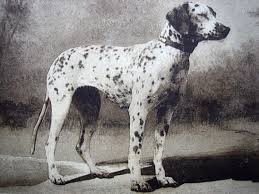
During the Regency period, the Dalmatian became a status symbol trotting alongside the horse-drawn carriages and those with decorative spotting were highly prized. For this reason, the breed earned the epithet ‘the Spotted Coach Dog.’ The breed was also used to guard the stables at night.
The breed had been developed and cultivated chiefly in England. The first unofficial standard for the breed was introduced by Englishman Vero Shaw in 1882. In 1890 with the formation of the first Dalmatian Club in England, the standard became official.When the dog with the distinctive markings was first shown in England in 1862, it was said to have been used as a guard dog and companion to the nomads of Dalmatia. The breed’s unique coat became popular and widely distributed over the continent of Europe beginning in 1920. Its unusual markings were often mentioned by the old writers on cynology.
 doglover.data.blog